Before paying a deposit on a used car, compare the mileage on the dashboard with dated servicing invoices and any mileage records the seller can provide. Look at the readings in date order. If an older invoice shows a higher mileage than the dashboard shows today, ask the seller for an explanation and supporting records.
Why does the dashboard reading matter?
The mileage on the dashboard is one of the first things you use to compare used cars. It also helps you plan maintenance, because servicing, wear items and replacement parts are usually discussed in terms of how far the car has travelled. If the displayed figure is lower than the car's real mileage, you may be paying for a car with more wear than you think and planning maintenance too late.
How do you compare the listing, the dashboard and the service records?
- Write down the mileage in the listing and any figure the seller tells you in messages or on the phone.
- Photograph the dashboard reading when you view the car, with the ignition on.
- Ask for dated servicing invoices and any other records that show mileage, such as inspection or repair paperwork.
- Put the readings in date order. Mileage should go up over time. A reading that goes down, or a long gap with almost no change, is worth asking about.
- Ask the seller to explain any gap and to provide supporting records.
Is a mileage discrepancy always tampering?
No. A documented instrument cluster replacement can leave the dashboard showing a different figure from earlier records. A workshop or a seller can also simply record a figure wrongly on an invoice. That is why a discrepancy is a reason to ask questions and check the vehicle's history further, not proof on its own. Ask for the paperwork that explains it, such as the invoice for the cluster replacement.
What can an on-site scan read, and what are its limits?
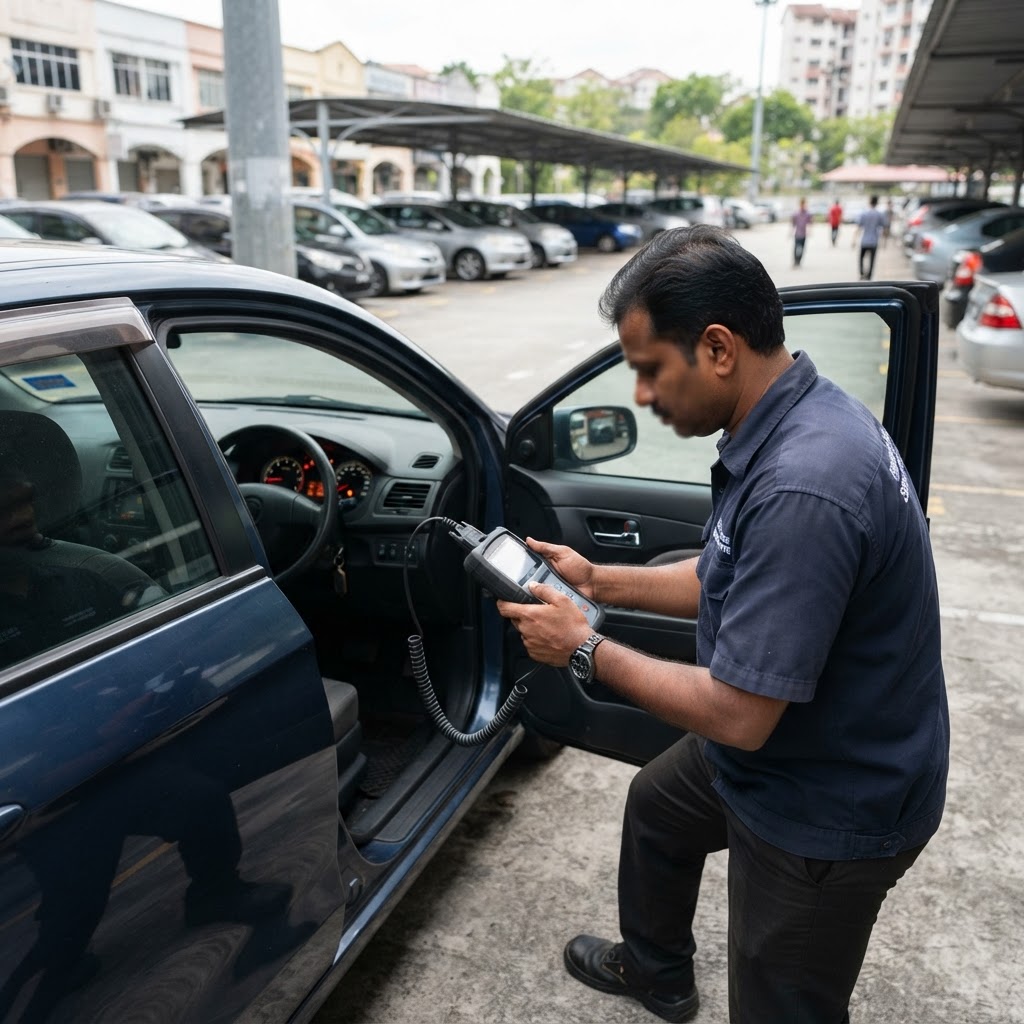
On supported models, a scan tool can read mileage-related values stored in accessible vehicle modules, which can then be compared with the dashboard reading. A scan of supported engine and gearbox systems can also list the diagnostic trouble codes that are available. Our on-site mileage tampering check does this at the vehicle and gives you a diagnostic report with the readings and codes found, any discrepancies, and any limitations or systems that could not be read.
Available readings vary by vehicle. A discrepancy is a reason to check the vehicle's history further. Even if the available readings match, a scan cannot confirm the car's true mileage or rule out past tampering. It is also not a full pre-purchase inspection.
What should you do before paying a deposit?
- Do the comparison above and keep copies or photos of the records.
- If the records do not line up, ask the seller for an explanation in writing and for supporting documents.
- Consider an on-site scan of the car before you commit. Where the car is at a dealer, arrange the dealer's permission first.
- Do not pay a deposit until the mileage questions have been answered to your satisfaction. If you are unsure, take more time or walk away.
What is the Singapore context?
CNA reported on 18 September 2026 that complaints about pre-owned cars have risen, with mileage tampering among the issues flagged. Read the report: CNA, 18 September 2026.
Want the car checked before you commit?
Our technician comes to the vehicle, whether it is at your premises, a workshop or a used-car dealer's premises, subject to access and permission. The on-site mileage tampering check starts from S$60, with the diagnostic report included. See the prices or book via WhatsApp on +65 8125 9169.
On-Site Mileage Tampering Check, from S$60